About Ngorongoro
The Crater That Contains a World
Ngorongoro Crater is the kind of place that resists description. Most visitors arrive at the rim at dawn, look down through the rising cloud into the bowl below, and simply go quiet. The scale is wrong in a way that takes a moment to process — the walls 600 metres above the floor, the soda lake at the crater's centre already glinting in the early light, the floor so vast you can barely see across it.
What makes Ngorongoro singular is not merely its geology but what it contains. Because the crater walls form a near-complete natural enclosure, the wildlife inside cannot easily leave. Over thousands of generations this has created an extraordinarily dense, stable, and observable animal community — one that has been studied continuously by scientists since the 1950s. The lions here are among the most-documented wild lion individuals in the world. The black rhino population is one of Africa's last truly protected groups. The elephant bulls that roam the floor are notable for their exceptionally large tusks, a trait maintained because trophy hunting has been absent here for decades.
A single full day on the crater floor, well-guided, is enough to encounter the Big Five. We have not promised this on any other park in our portfolio. In Ngorongoro, it is a reasonable expectation.
The crater floor at dawn — 25,000 animals within a single volcanic bowl
Anatomy of the Crater
From Rim to Floor — Five Ecosystems in 600 Metres
Descending into Ngorongoro is not just a change of altitude — it is a journey through five completely distinct habitats, each with its own wildlife, its own climate, and its own character. This is what you pass through on the drive down.
Morning cloud, highland forest, Maasai cattle. Buffalo, elephant, eland graze the rim edge. The departure point for all crater descents.
Steep volcanic slope, exposed rock and scrub. Klipspringer on the rocky outcrops. The 45-minute descent track begins here.
Dense montane forest cloaking the inner walls. Leopard, black-and-white colobus, olive baboon, bushbuck. The best leopard habitat in the Conservation Area.
Open short-grass plain and acacia woodland. Lion, black rhino, zebra, wildebeest, hyena, cheetah, golden jackal, elephant bulls. The main game-drive zone.
Alkaline soda lake at the crater's heart. Flamingo, pelican, hippo, crowned crane. The Ngoitokitok Springs feed freshwater into the lake's edge year-round.
The Big Five
All Five in One Bowl
Ngorongoro is the only place in Africa where genuinely strong odds on all five members of the Big Five exist within a single day's game drive. Here is what you may encounter — and where to find them.
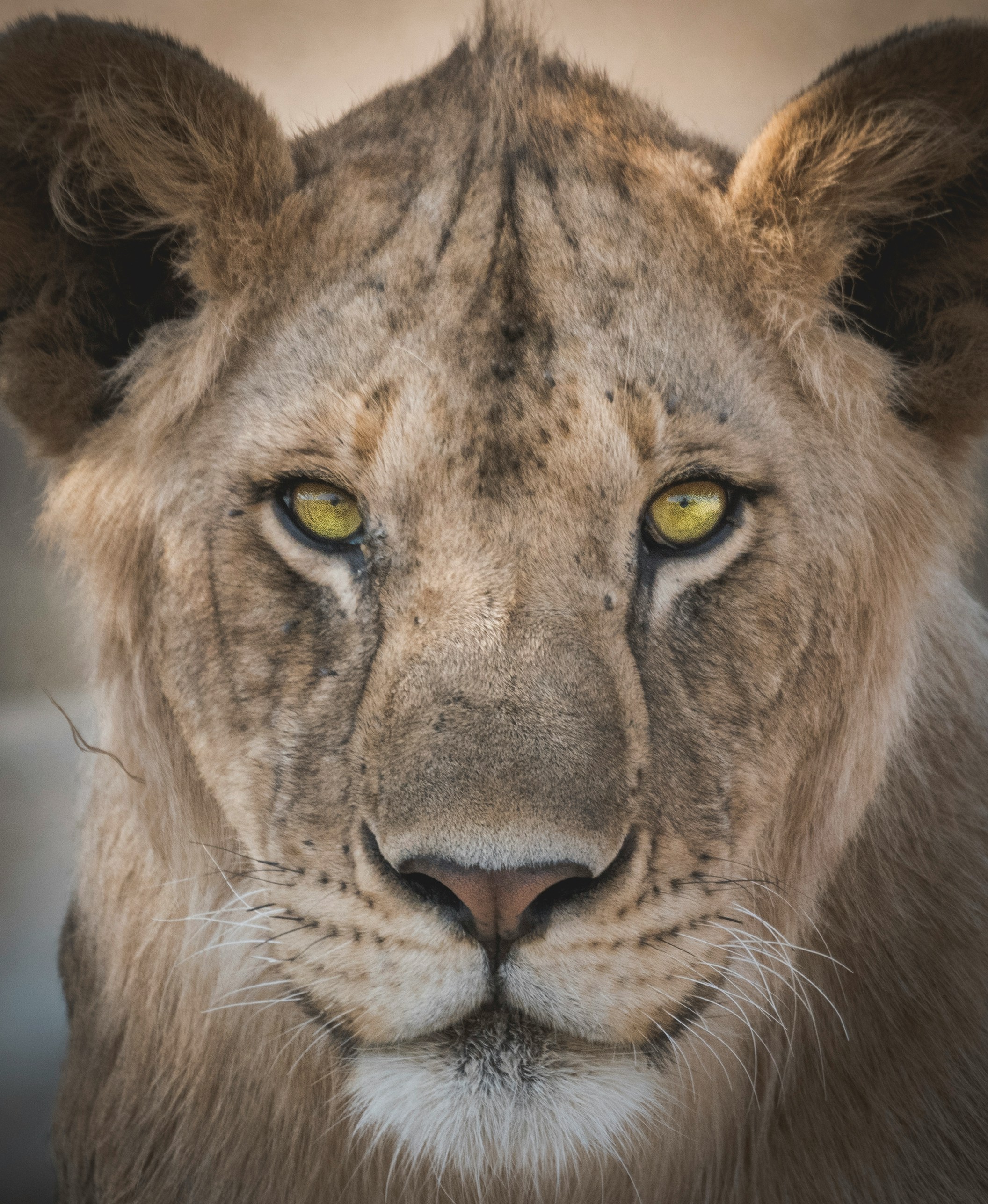
Approximately 70 lions in six prides call the crater floor home. They are among the most genetically isolated lions in Africa — the walls limit immigration — and among the most studied. They are completely habituated to vehicles and can be approached very closely in a respectful vehicle.
Daily SightingsLeopards inhabit the forest belt on the crater's inner walls rather than the open floor. They are seen less frequently than lions but the forest drive on descent — particularly in the early morning — is the most reliable opportunity. Ask your guide to take the forest route down.
Regular SightingsPredominantly large tusked bulls — the cows and calves prefer the forests on the rim above. The crater's adult males are notable for their exceptionally long ivory, a consequence of decades without poaching pressure. They move calmly, confidently, and very close to vehicles without concern.
Daily SightingsLarge herds of buffalo are present on the crater floor year-round, particularly around the lake's margins and the Lerai Forest in the southwest. Old bulls, separated from the herd, are commonly found in the acacia woodland — these dagga boys are among the most photographable individuals in the crater.
Daily SightingsNgorongoro holds one of East Africa's last stable populations of black rhino — approximately 26 individuals on the crater floor, under armed anti-poaching protection at all times. They are elusive, often staying in the acacia scrub on the eastern floor. A sighting is never guaranteed, but Ngorongoro is Africa's best hope for one.
Rare — Worth Waiting ForBeyond the Big Five
The Crater's Full Cast
Dawn light breaks over the crater rim — the best hour to begin the descent
A Day in the Crater
How a Perfect Crater Day Unfolds
The crater imposes its own rhythm. Understanding it is the difference between a good visit and a great one.
Vehicles must enter by 06:00 to make the most of the morning cool. The descent track through the forest belt takes 40–50 minutes. Dawn mist fills the crater; the floor is invisible until you emerge below the cloud. The first view of the crater floor from the inside, surrounded by 600-metre walls on all sides, is the moment every visitor remembers most clearly.
The morning's first hours are for predators. Lion prides are active before the heat builds — often finishing a night's hunting, moving to water, or resting in the open where they can be found easily. Your guide prioritises the current position of the known prides and any rhino reported in the area from the previous afternoon. Hyena clans are finishing their nocturnal activities at this hour.
The soda lake at the crater's centre holds flamingo flocks whose numbers fluctuate with water alkalinity — sometimes hundreds, sometimes tens of thousands in a pink line around the lake's southern shore. The Ngoitokitok Springs, where freshwater enters the lake, hold resident hippos year-round and attract most of the crater's bird activity: grey-crowned cranes, saddle-billed storks, the kori bustard walking in slow procession through the grass nearby.
The only designated picnic site on the crater floor — a shaded area directly beside the hippo pool at Ngoitokitok. A Mwala picnic lunch is laid out while hippos surface five metres away. Black kites are a serious nuisance here — hold your food deliberately. The crater walls rise 600 metres above your head on all sides; eating lunch in this location is one of the most atmospherically extraordinary meals in Africa.
The afternoon is dedicated to the black rhino. Ngorongoro's rhinos tend to stay in the acacia scrub on the crater's eastern side during the midday heat, emerging toward the open grassland in late afternoon. Your guide will have intelligence from the morning's ranger reports on where individuals were last seen. The Lerai Forest — a stand of yellow-barked fever trees in the southwestern floor — is also searched in the afternoon for leopard and elephant bulls in the shade.
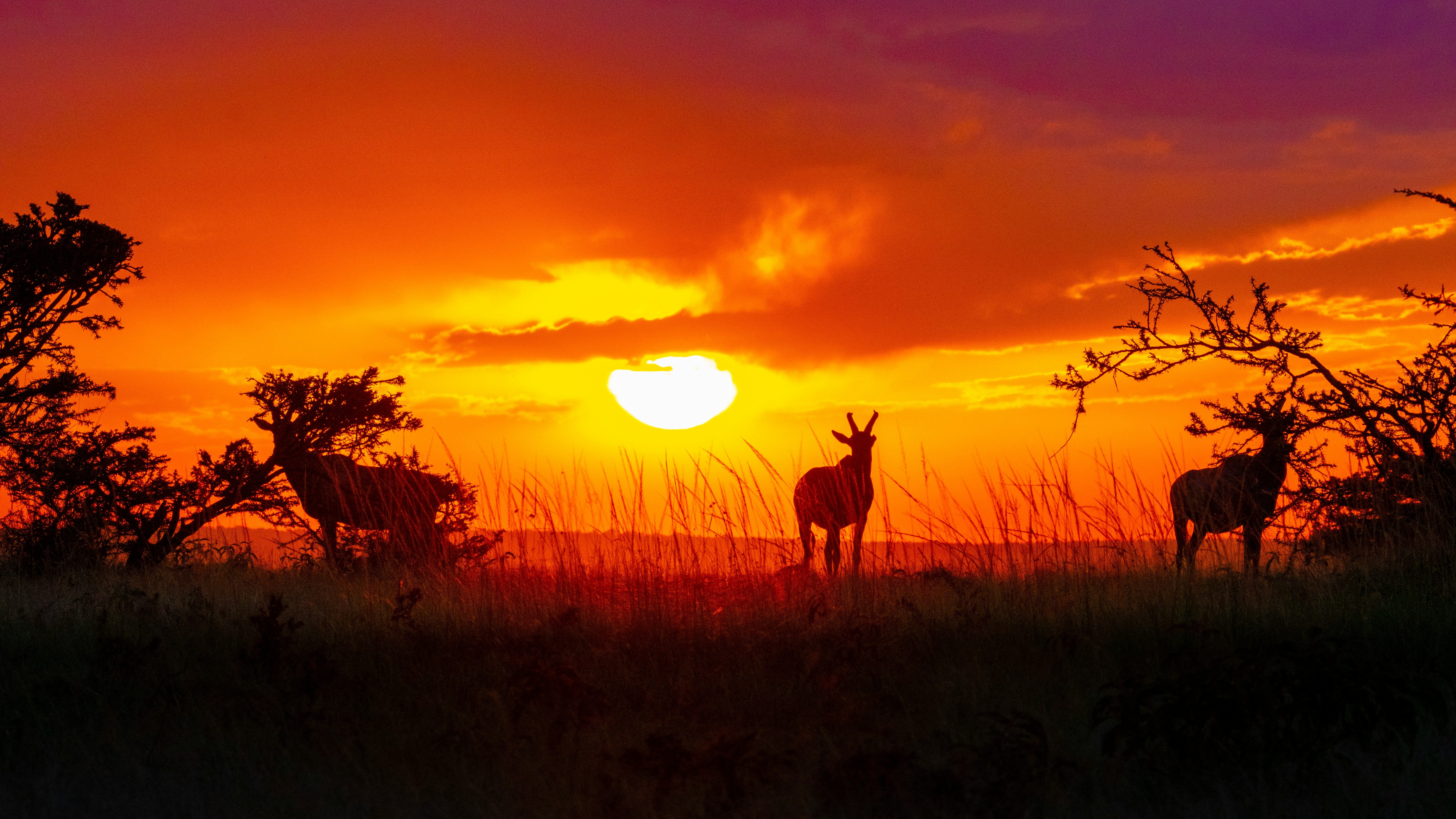
All vehicles must exit the crater by 18:00. The ascent track on the opposite side from descent gives a different view of the walls and floor as the light turns golden. Sundowner drinks on the crater rim as the sun drops behind the western wall — the crater below filling with shadow while the rim stays lit — is the day's final extraordinary moment. Dinner at the lodge overlooking the caldera.
Habitats
Six Ecosystems, One Conservation Area
Ngorongoro Conservation Area is much larger than the crater alone. At 8,292 km², it encompasses highlands, forests, and open plains extending to the Serengeti border — each habitat worth exploring in its own right.
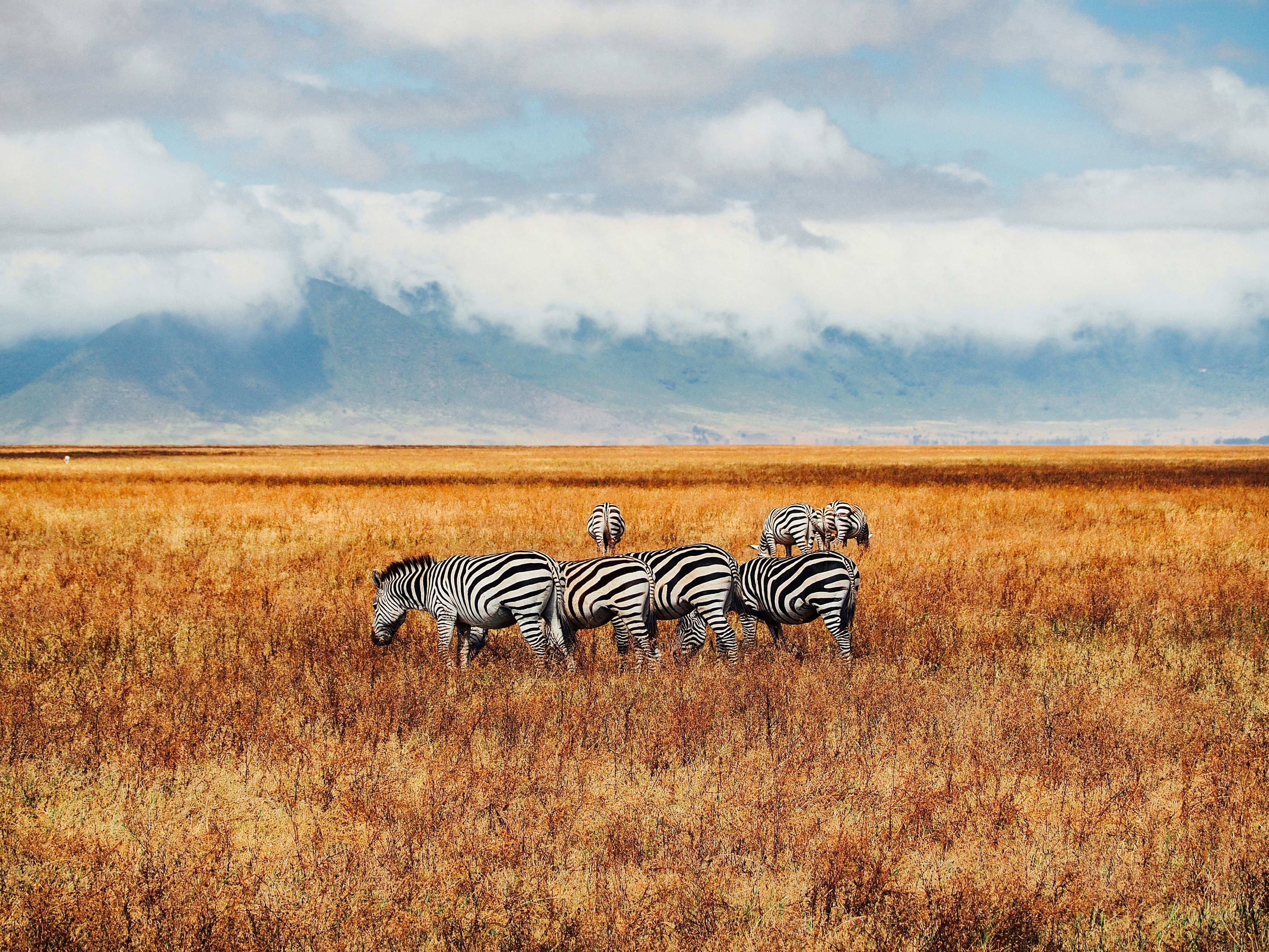
The 260 km² caldera floor is the most intensively game-viewed area in Africa. Short grass, acacia patches, and the soda lake create a variety of micro-habitats that support all the crater's megafauna. Daily vehicle numbers are capped to protect the experience and the ecosystem.
A stand of yellow-barked acacia — the iconic fever tree of East Africa — forms a dense woodland in the crater's southwestern corner. Elephant bulls use this area for shade; leopard are occasionally sighted here in the late afternoon; and the birdlife beneath the canopy is extraordinary.
The highland forests above the crater rim support eland, buffalo, and elephant families — the cows and calves that rarely descend to the floor. Empakaai Crater, a smaller and water-filled caldera 30 km northeast, is accessible by hiking trail and holds its own flamingo population.
The short-grass plains at the NCA's southern border merge seamlessly with the Serengeti — this is the wildebeest calving ground visited by the Migration between January and March. Cheetah, lion, and hyena reach extraordinary densities here during calving season.
A side trip of approximately 45 minutes from the crater rim, Olduvai Gorge is where Mary and Louis Leakey discovered fossils of Homo habilis and Australopithecus boisei — ancestors of modern humans. The small but genuinely fascinating museum explains how the gorge's exposed layers function as a 2-million-year archive of human evolution.
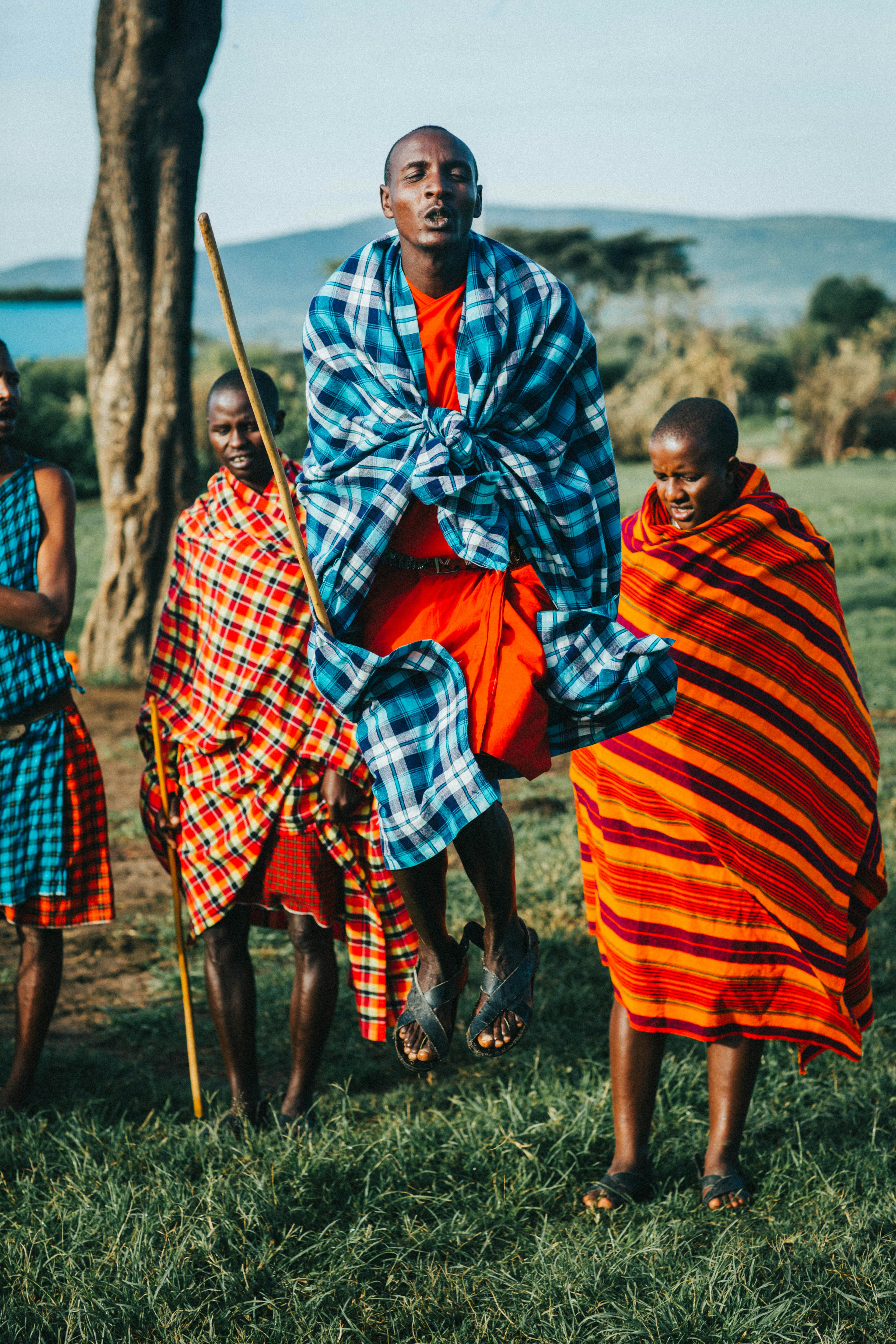
The Ngorongoro Conservation Area is the only protected area in Tanzania where people and wildlife share the land — approximately 80,000 Maasai live within the NCA boundaries, practising traditional pastoralism. Village visits at the crater rim offer a genuine encounter with Maasai culture, not a staged performance, and proceeds support the community directly.
Planning Your Visit
Practical Information
Ngorongoro is 3–4 hours by road from Arusha via the Ngorongoro Conservation Area gate at Lodoare. The road is good tarmac from Arusha to the gate, then gravel across the highlands to the crater rim. No flights operate directly to Ngorongoro — the nearest airstrips are at Manyara (1.5 hrs) and Seronera in the Serengeti (90 mins). All our packages include private 4×4 road transfers.
The crater has a vehicle limit — a set number of vehicles are permitted on the floor each day, and descent slots fill quickly in peak season. Entry fees for non-residents are approximately USD 70 per person per day for the NCA, plus a separate crater service fee. All fees are included in Mwala packages. Early descent is strongly recommended — by 10:00, vehicle density on the floor increases noticeably.
The crater rim sits at 2,300 metres — considerably cooler than the Serengeti or Manyara. Rim temperatures at night can drop to 5–8°C year-round; mornings are frequently misty and cold until mid-morning. The crater floor is warmer by 6–8°C. Pack a warm fleece or light jacket regardless of season. Afternoons on the floor can be hot (28–32°C) and dusty in the dry season.
Three tiers are available on the rim: Budget — Simba Campsite (public site, basic facilities, extraordinary rim position). Mid-range — Ngorongoro Sopa Lodge (comfortable rooms, swimming pool, good crater views). Luxury — Ngorongoro Crater Lodge (one of Africa's most celebrated properties, cantilevered over the rim with floor-to-ceiling glass facing the caldera). Being on the rim means being first into the crater at dawn — worth the premium over Karatu lodges below.
The crater floor's openness makes it one of Africa's finest photography locations — animals are visible at great distances and light is rarely obstructed. Best light: 06:00–09:00 (golden, directional, low) and 16:00–18:00. Mid-day light is flat and harsh. A telephoto of 300mm+ is recommended for rhino, which are often at distance. A wide-angle (24mm) captures the crater walls framing game-drive scenes in a way unique to Ngorongoro.
No off-road driving is permitted anywhere on the crater floor — strictly enforced by rangers. No night drives on the crater floor; vehicles must ascend by 18:00. No walking outside vehicles except at the designated Ngoitokitok picnic area. Food must not be offered to wildlife. These rules exist to protect both the animals and visitors — they are taken seriously and violations result in immediate expulsion from the crater.
When to Visit
Best Time for Ngorongoro
Ngorongoro rewards visits year-round — the resident wildlife does not migrate and the crater walls provide shelter from wind and some rain. Seasonal differences are subtle but meaningful for certain wildlife.
June–October is peak season: the long dry season leaves the crater floor's grass short and yellow, giving exceptional visibility across the entire caldera. Flamingo numbers on Lake Magadi tend to be highest in the dry months when the lake's alkalinity concentrates. January–February is excellent — mild temperatures, green crater floor from the short rains, and a visit to the nearby Ndutu Plains for the calving Migration is possible as a day trip. April–May brings the long rains — the crater floor can be muddy but the landscape turns vivid green and visitor numbers drop significantly. We operate all year and advise on conditions before each departure.
Visit Ngorongoro with Mwala
Choose Your Ngorongoro Safari
Ngorongoro works as a standalone destination or as the final chapter of a longer Northern Circuit itinerary. Both approaches are exceptional.
Two full days on the crater floor, the Olduvai Gorge, and a Maasai village visit. The complete standalone Ngorongoro trip from Arusha.
View Package →Ngorongoro as the final day of the complete Northern Circuit — after Tarangire, Lake Natron, Serengeti, and Manyara. Tanzania's full story.
View Package →Add a Maasai cultural visit, an Empakaai hike, or a Ndutu plains day during calving season. Tell us your priorities and we'll build around them.
Enquire Now →Questions Answered