About Lake Manyara
The Park That Punches Far Above Its Size
Lake Manyara National Park is Tanzania's great secret — a place that most visitors treat as a one-night warm-up for Ngorongoro and the Serengeti, and that almost all of them leave wishing they had stayed longer. At 325 square kilometres, it is a fraction of the size of the Serengeti. What it lacks in scale it compensates for in ecological density that has no parallel in Tanzania's national park system.
The park exists in a narrow strip between the Rift Valley escarpment — a vertical wall of volcanic rock 600 metres high — and the alkaline waters of Lake Manyara itself. Squeezed between cliff and lake, the park packs five completely distinct ecosystems into a corridor fifty kilometres long: groundwater forest, bush woodland, open floodplain, lakeshore marsh, and the alkaline lake surface. Driving from north to south, you pass through all five in sequence. The wildlife shifts entirely from zone to zone. Baboons in the forest canopy. Elephants on the floodplain. Flamingos on the lake edge. Tree-climbing lions in the acacia. And over all of it, the escarpment wall glowing gold and ochre in the afternoon light.
The lions are why most people come. They are why most people return.
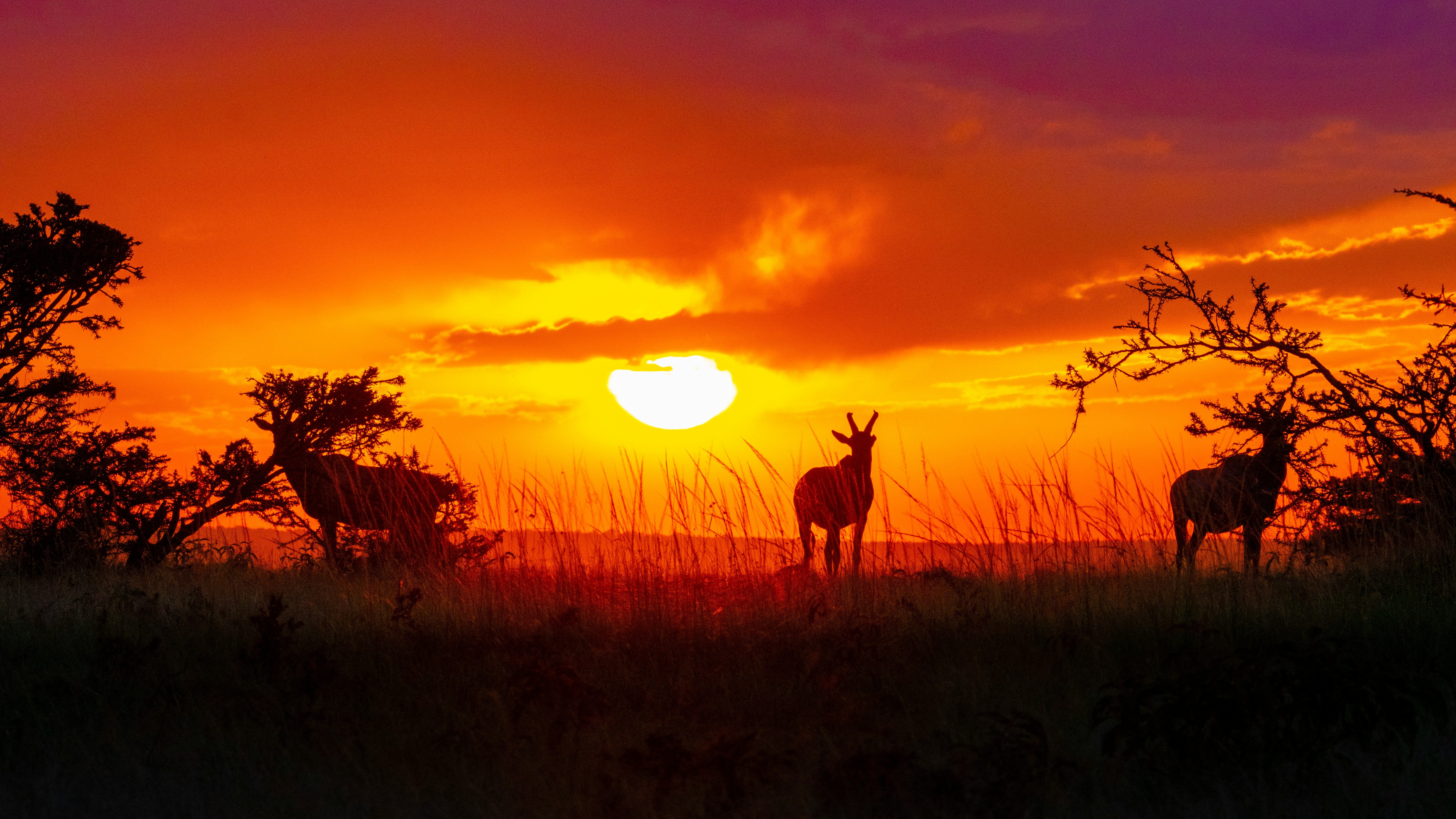
The lake at golden hour — flamingos feeding in the shallows, the escarpment wall catching the last light behind
The Park's Anatomy
Five Ecosystems, One Rift Valley Drive
Manyara's extraordinary diversity comes from its geography — squeezed between a cliff and a lake, each zone has its own distinct climate, vegetation, and wildlife. This is what you drive through, north to south, on every game drive.
The Rift Valley wall rising directly behind the park. Fed by underground springs that flow down through the rock to create the groundwater forest. Buffalo, eland, klipspringer on the cliff face.
Ancient groundwater forest fed by underground springs. The most productive zone for tree-climbing lions and primates. Baboon troops, blue monkey, colobus, leopard, bushbuck.
The lion habitat. Scattered acacia and sausage trees with open grass between — the zones most used by Manyara's famous tree-climbing prides. Lion, impala, giraffe, warthog.
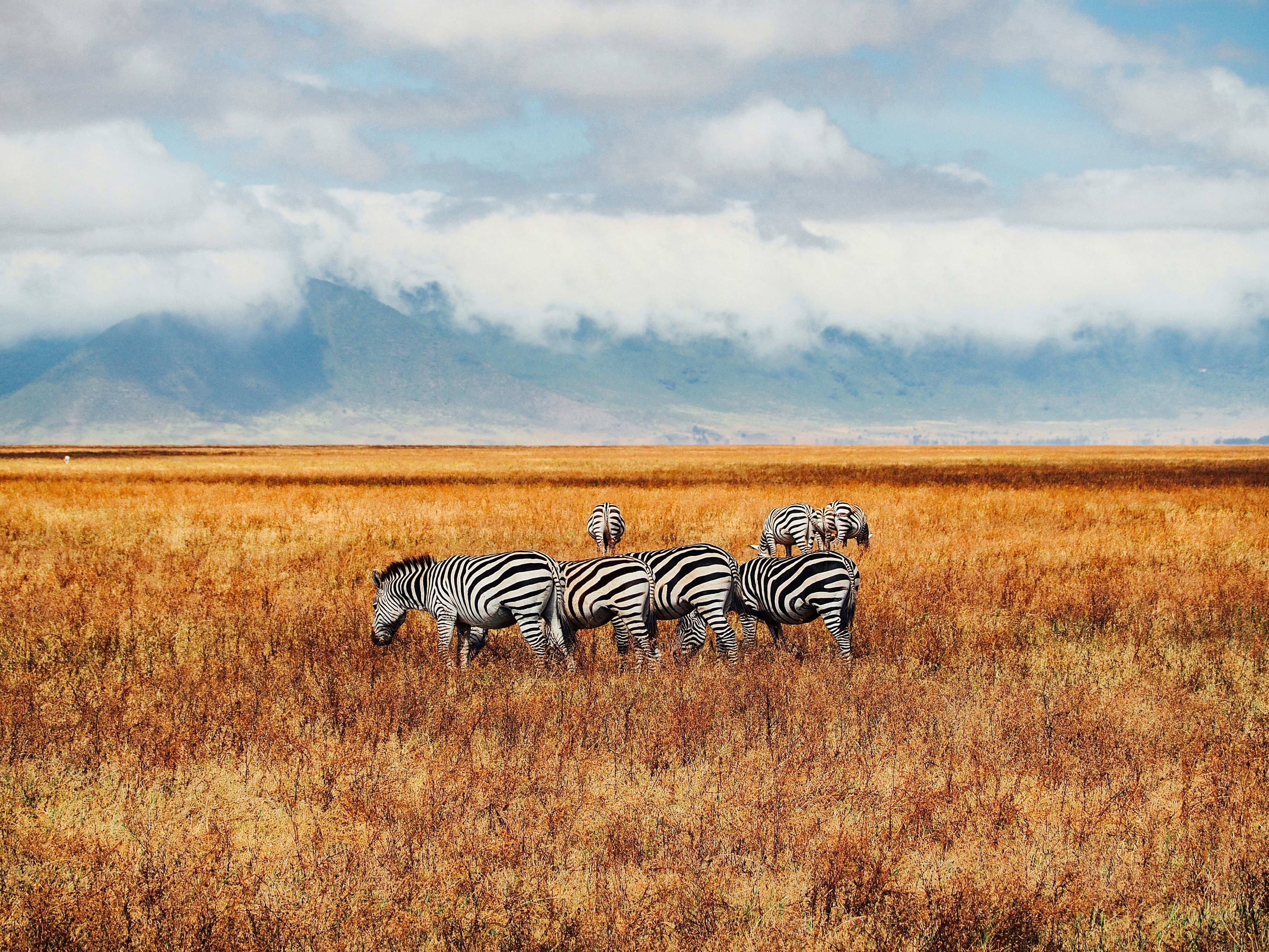
Wide open floodplain where elephant families graze at dusk. The largest landscape in the park and the easiest for spotting large herds. Elephant, zebra, wildebeest, giraffe, hippo pools.
The lake's edge where alkaline shallows support flamingo colonies and an extraordinary diversity of waterbirds. Flamingo, pelican, stork, fish eagle, hippo, 400+ bird species.
The Tree-Climbing Lions
Why Lions Climb Trees at Manyara
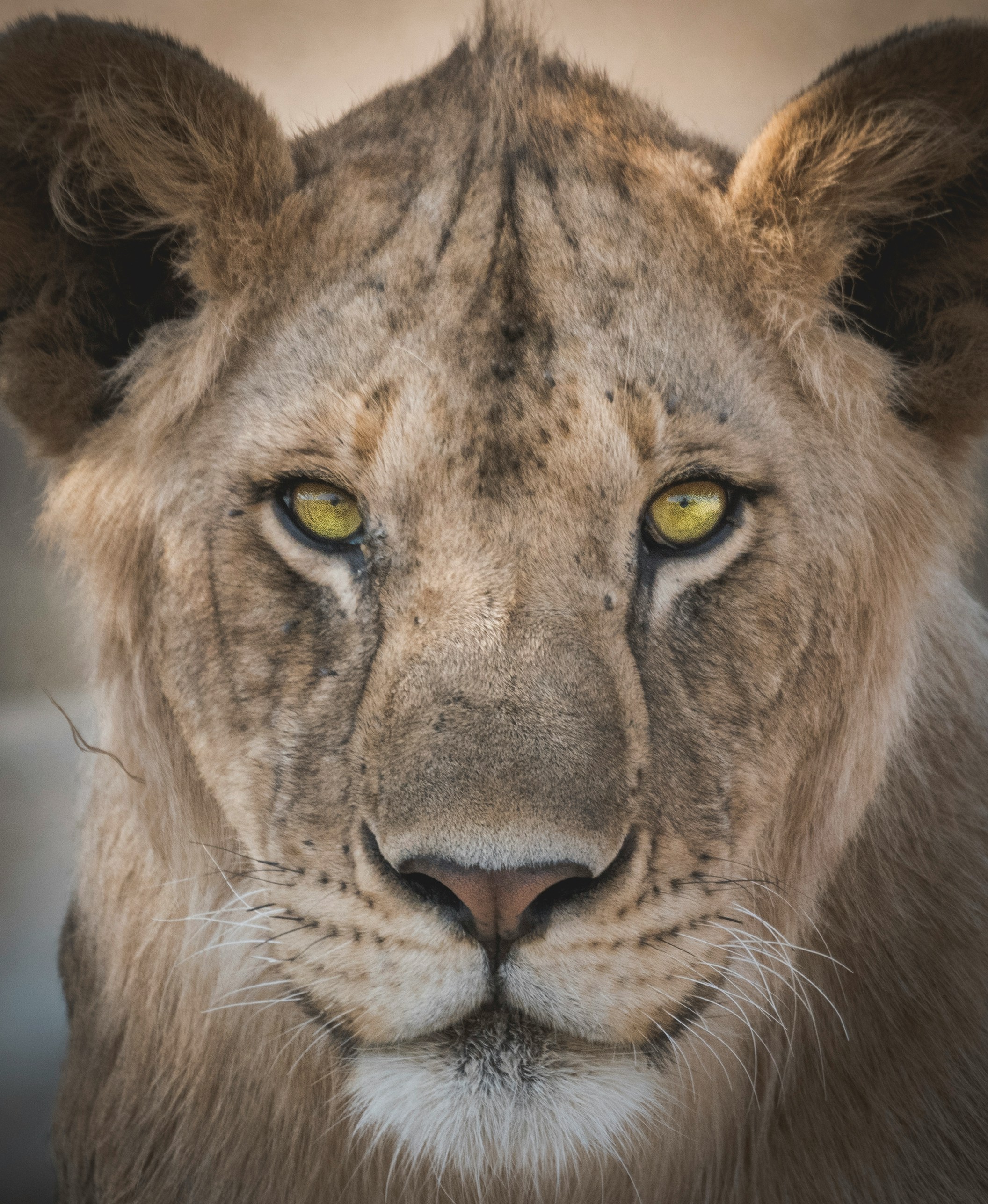
Lake Manyara is one of the only places in the world where lions habitually climb trees. It is a behaviour documented nowhere else in East Africa with this frequency and one that scientists have studied for decades without reaching a definitive explanation.
The leading hypotheses involve temperature regulation, insect avoidance, and the elevated vantage point for spotting prey. What is certain is that the behaviour is learned and transmitted within family groups — cubs that grow up watching their mothers climb become climbers themselves. The Manyara lions have been doing this for generations.
Temperature theory: The park's high humidity makes the ground extremely hot midday. Elevated in a tree, the lions catch the breeze and escape both the heat and the tsetse flies that concentrate in the undergrowth.
Hunting advantage: From a branch 8–12 metres up, a lion has an unobstructed view across the floodplain — able to track herd movements and identify injured animals from a position that the prey cannot smell.
The trees: Manyara's lions favour specific trees — sausage trees (Kigelia africana) with large horizontal branches, and yellow acacia with fork structures that provide a comfortable rest at height. Our guides know which trees to check.
The photograph: A 180kg lion horizontal on an acacia branch, entirely relaxed, tail hanging, looking down at your vehicle from above — it is unlike any lion image taken anywhere else. Most visitors photograph more lions at the Serengeti; none photograph lions like this.
Wildlife
Animals of Lake Manyara
Manyara's lions are not the most numerous in Tanzania, nor the largest — but they are the most distinctive. The park holds several prides whose members have all been raised in the tree-climbing tradition. Our guides know the territories, know the favoured trees, and know which hours of the day each pride most reliably climbs. No visit to Manyara is complete without searching for them in the canopy.
When water levels and alkalinity are right, Lake Manyara's southern shallows turn entirely pink. The flamingo flocks here can number in the hundreds of thousands — not the 2.5 million of Lake Natron, but spectacular in scale and far more accessible from the vehicle track along the lake edge. The flamingos feed in tightly packed masses that shift and swirl in unison.
The lilac-breasted roller — Manyara's most-photographed bird, perched on every dead acacia branch at the forest edge
Birding
400 Species in One Park
Lake Manyara is one of Tanzania's premier birding destinations — a fact that surprises visitors who come for the mammals and leave converting to birdwatchers. The combination of forest, woodland, floodplain, lakeshore, and open water creates an extraordinary diversity that few parks in East Africa can match in such a compact area.
Our guides carry identification guides and binoculars as standard. If you are a dedicated birder, tell us when enquiring — we will pair you with a specialist guide whose life list runs to 700+ species and who knows every resident individual in the park by territory.
Manyara's most-photographed bird — a jewel of iridescent blue, lilac, green, and chestnut that perches conspicuously on dead branches at the woodland edge, scanning the ground for insects. Every colour in the visible spectrum seems to appear somewhere on its plumage. The roller is present year-round and reliably found on every game drive.
The fish eagle's call is the sound of Africa — a wild, descending cry that carries for kilometres across the water. Manyara's lake shore holds resident pairs on dead acacias above the water's edge, making dramatic plunge-dives for fish in the shallows visible from the vehicle track. The call, once heard, is never forgotten.
The largest hornbill in the world — an extraordinary bird that walks in stately procession across the floodplain in groups of four to six, its deep booming call audible at dawn. The red facial skin of breeding males is vivid against the bird's otherwise all-black plumage. Groups walk up to ten kilometres in a single day. Long-lived and slow-breeding, their presence indicates a healthy ecosystem.
Uganda's national bird is equally at home at Manyara — an elegantly strange creature with a golden crown of feathers, crimson cheek patch, and a dancing courtship display that humans have been watching and imitating for thousands of years. The cranes are seen on the floodplain, often in pairs, occasionally in larger groups during the wet season.
Manyara is one of very few places in East Africa where six kingfisher species can be seen in a single day: the giant kingfisher, malachite kingfisher, pied kingfisher, striped kingfisher, grey-headed kingfisher, and woodland kingfisher. Each occupies a different habitat micro-niche — together they represent one of the finest kingfisher spectacles in the region.
The world's largest heron — standing 1.5 metres tall and hunting fish in water too deep for any other wading bird. Goliath herons stalk the lake shallows in slow motion, striking with a bill the size and weight of a short sword. Seeing one next to a normal grey heron clarifies the "goliath" immediately: it is enormous, and it moves with the unhurried confidence of something that has no predators.
Safari Experiences
How to Experience Lake Manyara
Manyara rewards different kinds of attention at different hours. The forest demands patience and quiet. The floodplain rewards stillness at dusk. The lake shore is best at dawn, when the flamingos begin their feeding movements and the escarpment catches the first light.
The groundwater forest game drive — the most productive zone for tree-climbing lions and forest primates
A full-day drive covers all five ecological zones in sequence — forest, woodland, floodplain, shore, and lake edge. The morning is dedicated to the forest and tree lions; midday to the floodplain and hippo pools; afternoon to the lake shore at golden hour when the flamingo flocks reorganise for their evening feeding. Picnic lunch is served beside the lake. The full circuit is approximately 50km and takes 8–10 hours driven properly.
The forest game drive at dawn is Manyara at its most atmospheric. Mist in the fig canopy. Baboon troops crossing the road. The groundwater forest alive with birdsong as the light gradually filters through the canopy. And the tree-climbing lions — most active early morning and late afternoon — most likely to be found elevated in the sausage trees and acacias at this hour. This is the drive to add if you have one morning at Manyara.
Manyara's 400+ species are spread across all five zones — meaning a specialist birding drive covers the park differently to a mammal-focused game drive, moving slowly through the forest edge, pausing at the lake margin for waders, and spending significant time at the hippo pool where the diversity of species is extraordinary. If you are a birder, specify this when enquiring and we will arrange a guide whose primary expertise is ornithology.
The park's woodland and forest edge at night reveal species entirely absent from the day drives — the serval hunting the grassland edge, the genet patrolling the forest floor, the bushbaby peering from the tree canopy with enormous reflected eyes. Manyara's night drive focuses on the northern woodland and forest zone, where nocturnal species density is highest. Available on request through partner lodges with the appropriate permits.
Near the park's southern boundary, geothermal springs emerge from the valley floor — pools of warm, sulphur-scented water surrounded by papyrus and endemic reed frogs. The springs are reached by a short guided walk from the vehicle, through a section of the park rarely visited by other tourists. Elephant sightings are common in this area, and the springs themselves are an extraordinary geological feature in an already geologically remarkable landscape.
Planning Your Visit
Practical Information
Lake Manyara is 2 hours south of Arusha on good tarmac via Makuyuni junction and then down to the town of Mto wa Mbu at the park gate. It is the closest major national park to Arusha and Kilimanjaro International Airport — making it an ideal first or last stop on the Northern Circuit. The descent from the Ngorongoro highlands to the Rift Valley floor on the approach road gives a first view of the lake and escarpment that acts as an introduction to what awaits.
Budget: Jambo Campsite in Mto wa Mbu town — clean, simple, and 5 minutes from the gate. Mid-range: Lake Manyara Serena Lodge — built into the escarpment wall with commanding views over the entire park and lake from its terrace; swimming pool, sundowner deck, and reliable Wi-Fi. Luxury: Kirurumu Tented Lodge — 16 tents perched on the escarpment edge with unobstructed Rift Valley views; the finest sundowner position in northern Tanzania.
A minimum of one full day and one night allows both the morning forest drive and the afternoon lake shore drive. Two nights is recommended for birders or photographers who want to explore the southern springs area and attempt the night drive. Manyara works as a standalone 2-day escape from Arusha, as the final stop before Ngorongoro on the Northern Circuit, or as the combination destination paired with a short Lake Manyara Escape package (see below).
Manyara produces two completely distinct photographic environments: the forest (dark, complex, close-range, requiring fast lenses at wide apertures) and the lake shore (open, bright, long distances, requiring telephoto reach for flamingos). For tree lions: a 70–200mm is ideal; be ready to shoot upward into backlit canopy. For flamingos: 300mm minimum, 500mm preferred. The escarpment in late afternoon light behind any subject gives Manyara images their distinctive character.
When to Visit
Best Time for Lake Manyara
Manyara is a year-round destination — the tree-climbing lions are resident regardless of season, and the forest wildlife doesn't migrate. The main variable is flamingo numbers, which depend on lake water levels.
June–September is peak season: the dry season concentrates wildlife around remaining water sources, the tree-climbing lions spend more time elevated to escape the heat, and the lake level drops to expose the alkaline shallows that flamingos prefer for feeding. The escarpment light in the dry season is the most photogenic — golden, clear, and long. January–February is excellent — warm but not oppressively hot, migratory bird species from Europe are present, and the park is far less crowded than the July–September peak. November–December brings the short rains, turning the forest an extraordinary lush green and reducing visitor numbers dramatically — worth the trade-off for those who prefer solitude. March–May (long rains) produces muddy tracks and can make some forest sections impassable; we operate but advise accordingly.
Visit Manyara with Mwala
Choose Your Manyara Safari
Manyara works as a focused 2-day escape from Arusha or as part of the full Northern Circuit. Both are exceptional in completely different ways.
A focused 2-day standalone: forest drive, tree lions, flamingos, hippo pools, and a night on the escarpment. The closest major park to Arusha — ideal for short breaks.
View Package →Manyara as Day 6 of the full circuit — after Tarangire, Natron, and the Serengeti, before the Ngorongoro crater descent. The complete Northern Tanzania story.
View Package →The most natural 4-day combination on the circuit — both parks sit on the same road, 90 minutes apart. Tree lions one day, black rhino the next.
Enquire Now →Questions Answered